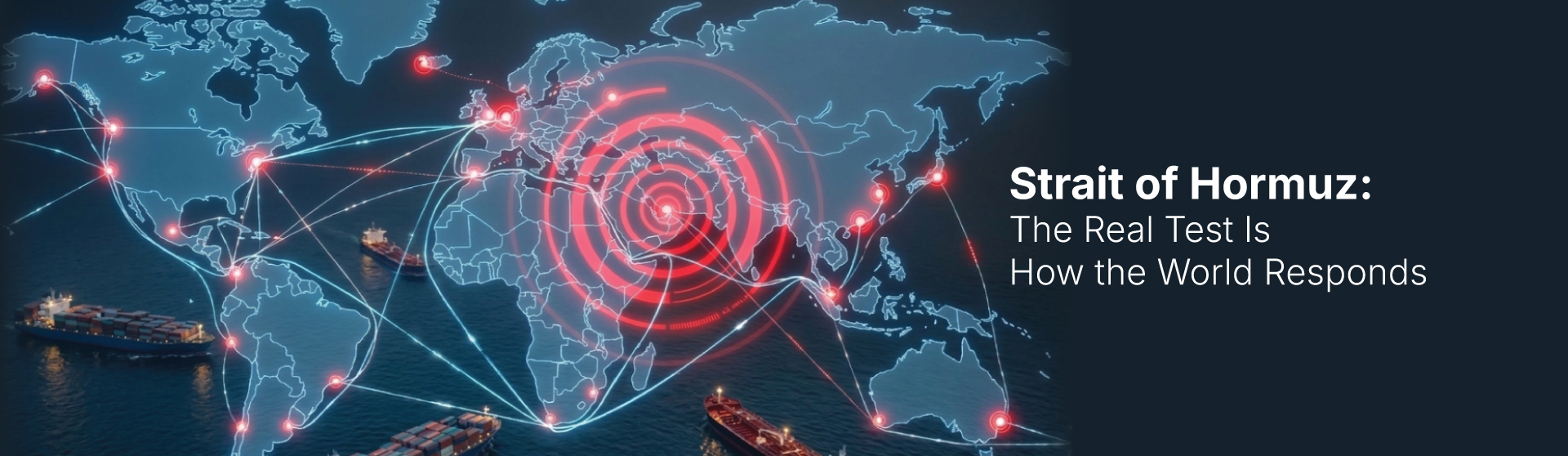
Strait of Hormuz: The Real Test Is How the World Responds
As headlines flood in about rising tensions between Iran, Israel, and the United States, most of us focus on the obvious:
- Missiles.
- Military responses.
- Diplomatic warnings.
But for those of us in the supply chain, the attention quickly shifts to a narrow stretch of water most people barely think about: the Strait of Hormuz. At its narrowest, it’s just 33 kilometers wide. Yet nearly 20% of the world’s oil supply passes through it every single day.
The first question people usually ask is simple: What happens if the route gets disrupted?
But from years of observing global supply chains during crises, I’ve learned something that’s easy to miss: the real disruption often doesn’t start with ships stopping. It starts with how the world reacts. The moment tension rises near a corridor like Hormuz, thousands of companies across the globe begin making decisions at the same time:
- Shipping lines rethink routes.
- Energy traders adjust prices.
- Companies rush to secure inventory.
- Buyers place orders earlier than planned.
Individually, each decision seems sensible. But together, they can amplify volatility across the system.
- Prices spike faster than actual shortages.
- Freight capacity tightens before routes even close.
- Inventory hoarding in one place creates shortages somewhere else.
Put simply: supply chains aren’t just disrupted by events themselves. They’re disrupted by the reactions to those events.
We saw this during the pandemic when panic buying and supply shocks fed off each other.
We saw it again during the Suez Canal blockage and disruptions in the Red Sea.
And that brings me to what I believe is the real leadership challenge in moments like this.
A strong supply chain leader doesn’t just track vessels, ports, or inventory. They understand human behavior inside complex systems. Because in global trade, the biggest disruptions often happen when everyone reacts at once.
The best leaders in these moments aren’t the fastest to panic or the first to react. They’re the ones who stay calm, analytical, and people-focused, helping their teams and partners respond thoughtfully rather than react impulsively.
The Strait of Hormuz, and moments like it, remind us of something crucial:
- Global supply chains are not just networks of ships, ports, and commodities.
- They are systems shaped by human decisions.
And sometimes, the most important skill a leader can have is not predicting the crisis, but preventing the reaction from becoming the crisis.
Author
Dr. Sathya Menon FCIPS, FCILT, FCMI, CPM, Certified SAP Consultant
Read the article on LinkedIn
https://www.linkedin.com/pulse/strait-hormuz-real-test-how-world-responds-dr-sathya-menon-1rugc/?trackingId=z5W3vYV8%2FTa7t%2FcC66iRyw%3D%3D