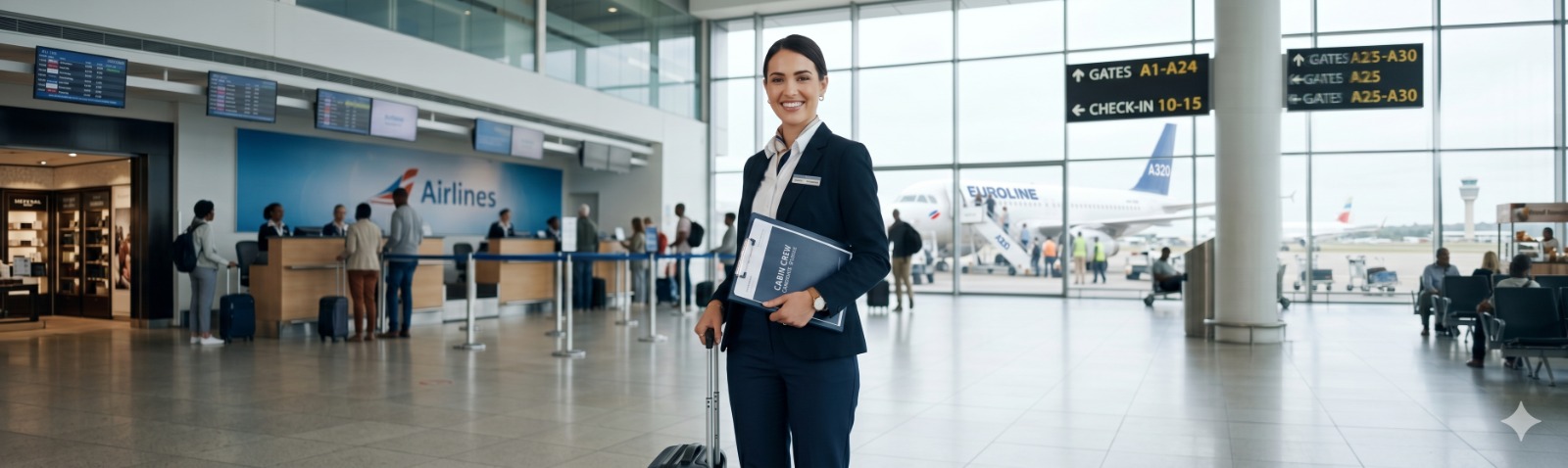
How to Prepare for a Cabin Crew Interview – Complete Guide
The cabin crew selection process is one of the most competitive in the Indian job market. Airlines receive thousands of applications for a limited number of positions, and the selection process is designed to identify candidates who are not only qualified on paper but who also carry the right personality, presentation, and professional attitude. This guide on cabin crew interview preparation covers everything from what to expect at each stage to specific air hostess interview tips that will help you stand out.
Understanding the Cabin Crew Selection Process
Most airlines follow a multi-stage selection process. Knowing
what each stage involves helps you prepare more effectively.
•
Walk-in Recruitment Drive or Online Application:
Airlines announce open days or accept online applications. Presenting yourself
professionally from the first point of contact is essential.
•
Initial Physical and Grooming Check: Candidates are
assessed for height, weight, reach test, visible skin condition, and overall
presentation. This stage happens quickly - your appearance and posture are
evaluated immediately.
•
Group Discussion (GD): Airlines assess communication
skills, confidence, listening ability, and teamwork through structured group
discussions on aviation and general topics.
•
English Language Test: A written or verbal test
assessing reading comprehension, communication, and basic grammar.
•
Personal Interview (PI): A one-on-one or panel
interview with airline HR representatives assessing your personality,
motivation, situational judgment, and suitability for the role.
• Medical Examination: A comprehensive medical check conducted by the airline's authorised medical team.
Cabin Crew Interview Questions - What Airlines Actually Ask
Preparing thoughtful, genuine answers to common cabin crew
interview questions is essential. Here are the questions that appear most
frequently, with guidance on how to approach them.
•
'Tell me about yourself.' - This is your opening
statement. Keep it professional, focused on your journey toward aviation, and
no longer than two minutes.
•
'Why do you want to be a cabin crew member?' - Avoid
clichés like 'I love travelling.' Focus on your genuine interest in service,
safety, and the dynamic work environment.
•
'How would you handle a difficult passenger?' -
Demonstrate patience, empathy, and calm problem-solving. Use a structured
response: acknowledge the issue, empathise, offer a solution.
•
'What would you do in an emergency situation on board?'
- Show your knowledge of safety procedures, your composure under pressure, and
your trust in training and protocols.
•
'Tell me about a time you provided exceptional customer
service.' - Use a specific real example from work, college, or personal
experience.
• 'How do you handle long working hours and irregular schedules?' - Be honest about your resilience and physical fitness while demonstrating genuine enthusiasm for the lifestyle.
Cabin Crew Grooming Tips - First Impressions That Last
Grooming is evaluated at every stage of the selection process.
Airlines have detailed grooming standards, and demonstrating that you
understand and can maintain these standards signals your professional
readiness.
•
Hair: Neatly tied, pinned up in a bun or chignon for
female candidates. Clean, well-styled, and professional for male candidates. No
bold or unnatural colours.
•
Makeup (Female): Natural, polished makeup that enhances
your appearance without being overly dramatic. Airlines typically prefer a
classic red or nude lip, defined eyes, and a well-set, even complexion.
•
Attire: Wear formal, well-fitted clothing. Female
candidates typically appear in a formal salwar suit, saree, or tailored skirt
and blouse. Male candidates should wear a formal shirt, trousers, and polished
shoes. Colours should be conservative - navy, black, white, or soft pastels.
•
Jewellery and Accessories: Minimal and elegant. Small
earrings, a simple watch or bracelet. No visible piercings other than standard
ear studs.
•
Footwear: Polished, formal closed-toe shoes with a
moderate heel are the standard for female candidates. Polished formal shoes for
male candidates.
• Posture and Deportment: Stand tall, walk confidently, and maintain a warm, natural smile. Your body language is assessed from the moment you enter the selection venue.
Airline Interview Preparation - Practical Tips
Strong airline interview preparation goes beyond rehearsing
answers. It requires a deep understanding of the airline you are applying to,
the role you want, and the industry you are entering.
•
Research the airline thoroughly: Know its history,
fleet size, routes, and recent milestones. Mentioning specific and accurate
facts about the airline in your interview demonstrates genuine interest.
•
Practice out loud: Thinking through your answers is not
enough. Speak them aloud, ideally in front of a mirror or with a practice
partner, to build confidence and identify areas for improvement.
•
Conduct mock interviews: Many quality aviation training
institutes provide mock interview sessions with experienced evaluators. Take
these seriously - they are among the most valuable preparation tools available.
•
Work on your English fluency: Read English newspapers,
watch aviation-related content in English, and practice speaking in structured,
clear sentences every day.
• Prepare questions to ask the interviewer: This shows genuine interest and professionalism. Ask about the training program, career development opportunities, or route operations.
Frequently Asked Questions
Q: What should I wear to a
cabin crew interview?
A: Formal, professional attire in conservative colours. Ensure
your clothes are well-fitted, wrinkle-free, and paired with polished footwear.
Your overall appearance should communicate that you understand the airline's
grooming standards.
Q: How long does the cabin crew
selection process take?
A: It varies by airline. Walk-in recruitment days can last
from morning to evening. The full process from application to final offer can
take two to eight weeks depending on the number of selection stages and medical
processing time.
Q: How many rounds are there in
a typical cabin crew interview?
A: Most airlines conduct three to five rounds: initial
screening, group discussion, English test, personal interview, and medical
examination. Some airlines add a psychometric assessment.
Q: What should I say if I do
not know the answer to an interview question?
A: Be honest. Saying 'I am not certain of the exact procedure,
but based on my training I would...followed by seeking guidance from the senior
crew member' demonstrates integrity and the right team-first attitude.
Cabin crew interview preparation is not something you can rush
at the last minute. It requires consistent work on your grooming,
communication, airline knowledge, and personal confidence over weeks and
months. Those who walk into selection centres having done this work -
thoroughly and genuinely - are the ones who walk out with job offers.
How Blue Ocean Corporation Helps You Crack Cabin Crew
Interviews
Cabin crew interview preparation becomes far more effective
when it is guided by industry professionals - and this is exactly where BlueOcean Corporation adds real value. Their training approach is built around
actual airline recruitment standards, ensuring that every aspect of your
preparation aligns with what recruiters look for. From IATA-aligned
curriculum to intensive grooming sessions, the focus is on building
candidates who are not just interview-ready, but airline-ready.
What strengthens this preparation further is the
availability of Cabin Crew pathways, which allow you to build
specialised knowledge alongside your cabin crew training. Whether you choose
CTA in customer service, airport operations, or airline management, these
programs enhance your understanding of the aviation ecosystem - something
interviewers notice immediately.
At Blue Ocean Corporation, mock interviews are conducted to
mirror real airline selection rounds, including group discussions, personal
interviews, and communication assessments. Trainers provide structured feedback
on your answers, body language, tone, and confidence, helping you refine every
detail. Combined with communication workshops, personality development, and
placement support, the training ensures that when you step into an interview
room, you do so with clarity, confidence, and a professional edge.
If you are serious about turning your cabin crew ambition
into a successful career, the right preparation environment makes all the
difference. Blue Ocean Corporation offers that structure, that discipline, and
that industry connection - helping you move from preparation to selection with
purpose.
If you are committed to standing out in a highly competitive
selection process, this combination of IATA certification + Blue Ocean
Corporation is what transforms preparation into success - and positions you
as a candidate airlines remember.