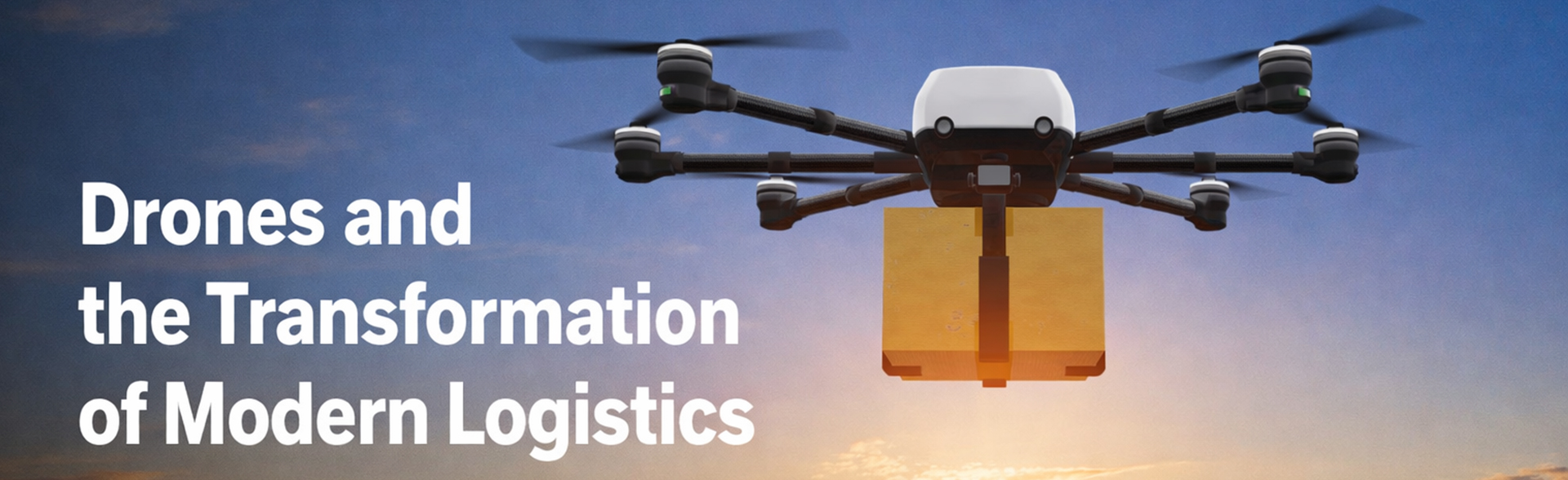
Drones and the Transformation of Modern Logistics


The Sky Is No Longer the Limit
The logistics industry is standing at the edge of one of its most defining transformations. The next great leap forward will not be driven by roads, ports or warehouses alone. It will take place in the air. Drones once viewed as hobby devices and creative tools are now emerging as serious enablers of speed efficiency and innovation across supply chains. Powered by advances in automation, artificial intelligence and battery technology drones are reshaping how goods move from origin to destination. This shift is not incremental. It represents a fundamental change in how logistics thinks, operates and delivers value.
Speed and Efficiency Redefined
In an industry where time directly impacts cost and customer trust, drones introduce an entirely new standard of speed. Traditional delivery systems rely heavily on road networks and human intervention which leaves them vulnerable to congestion infrastructure limitations and unpredictable delays. Drones rise above these constraints both literally and operationally. By traveling directly from warehouses to destinations they reduce delivery times dramatically and improve reliability. Urgent medical supplies, critical spare parts and time sensitive shipments can now be dispatched within minutes rather than hours. Global leaders such as Amazon UPS and DHL have already demonstrated that drone delivery is not only faster but also more cost efficient proving that speed is no longer a competitive advantage but an expectation.
Reaching the Unreachable
One of the most powerful aspects of drone technology lies in its ability to reach places that have long remained beyond the scope of conventional logistics. Remote regions and disaster affected areas often face severe access challenges that delay or prevent essential deliveries. Drones overcome these barriers with ease. In humanitarian logistics they are transforming response capabilities by delivering vaccines, blood supplies and life saving essentials to isolated communities. What was once considered unreachable is now within range. As this capability matures drones are expected to become a critical first and last link in global supply chains ensuring that distance no longer defines access.
Greener Pathways for Modern Logistics
Sustainability has become a central priority for logistics providers worldwide and drones offer a compelling path forward. Electric powered drones generate significantly lower emissions compared to fuel based delivery vehicles. By reducing road congestion and minimizing short distance vehicle trips they contribute to cleaner urban environments and more responsible logistics operations. Many organizations are now exploring hybrid delivery models where drones manage short haul and last mile deliveries while electric vehicles handle bulk transportation. This approach improves efficiency while supporting ambitious environmental goals reinforcing the idea that future ready logistics must be both fast and sustainable.
Smarter Warehouses Smarter Supply Chains
The impact of drones extends beyond transportation and into the core of warehouse operations. Inside distribution centers drones equipped with cameras sensors and scanning technology are redefining inventory management and asset tracking. They can scan thousands of barcodes or RFID tags in a fraction of the time required by manual processes. When integrated with artificial intelligence drones can autonomously navigate complex warehouse layouts, identify inefficiencies and coordinate with robotic systems to optimize workflows. This transition toward autonomous data driven operations is setting new standards for productivity and operational excellence.
Challenges on the Horizon
Despite their transformative potential, drone enabled logistics faces challenges that must be addressed for large scale adoption. Regulatory frameworks related to airspace management safety standards and privacy considerations are still evolving. However meaningful progress is underway. Governments, aviation authorities and logistics providers are working together to establish safe scalable guidelines for drone operations. As these frameworks mature, broader adoption will follow along with more advanced use cases such as heavier payloads, longer routes and fully autonomous delivery networks.
A Sky Full of Possibilities
The future of logistics is becoming increasingly clear and interconnected. Drones will not replace traditional systems but will work alongside trucks, robots and human expertise to create more resilient responsive supply chains. Deliveries will become faster and more reliable. Costs will continue to decline. Emissions will be reduced. Access will expand across regions once considered difficult to serve. The sky is no longer a limitation. It is the next frontier of logistics innovation symbolizing a future driven by progress, sustainability and possibility.
Preparing Talent for the Future of Logistics
As drones, automation and intelligent systems redefine logistics, the industry’s greatest need is skilled professionals who understand modern supply chains end to end. From procurement and sourcing to logistics planning, warehouse optimization and last-mile delivery, the future belongs to those who can connect strategy with execution in a rapidly evolving ecosystem.
At this pivotal moment, Blue Ocean Corporation emerges as a key industry catalyst. Through its globally aligned Supply Chain and Procurement training programs, Blue Ocean Corporation equips learners with practical knowledge, industry-relevant frameworks and internationally recognized certifications. The programs are designed to bridge the gap between traditional supply chain concepts and emerging realities such as automation, drone-enabled logistics, digital procurement and sustainable operations.
By combining expert-led training, real-world case studies and certification pathways, Blue Ocean Corporation empowers students and professionals to stay ahead of industry shifts and build careers that are future-ready. In a world where logistics is no longer confined to the ground, learning too must rise to new heights.
The sky is no longer the limit - for logistics, or for those prepared to lead its transformation.